Buying a new home? Ask what is behind the roof covering
A new-build roof is a complete assembly, not just a row of attractive tiles. Before reserving a home, ask for the roof specification, the warranty provider and the handover process. If you are commissioning a build, agree the design and the full roofing scope before comparing prices.
Keep four questions together: what is being built, who checks it, what evidence you receive, and who handles a problem after completion. A brochure photograph cannot answer those questions. This independent guide helps you prepare them; it does not represent a developer, certify a property or replace a professional inspection.
New-build roofs. Know what you are buying.
A practical roof guide for new-home buyers and self-builders. Understand the specification, compare complete packages and turn quotation figures into a clearer budget.
Independent editorial guide, researched 6 October 2026. Technical design and project-specific VAT require qualified professional advice. This is not a roofing contractor or a developer website.
Find practical answers ↓ Estimate your roof budget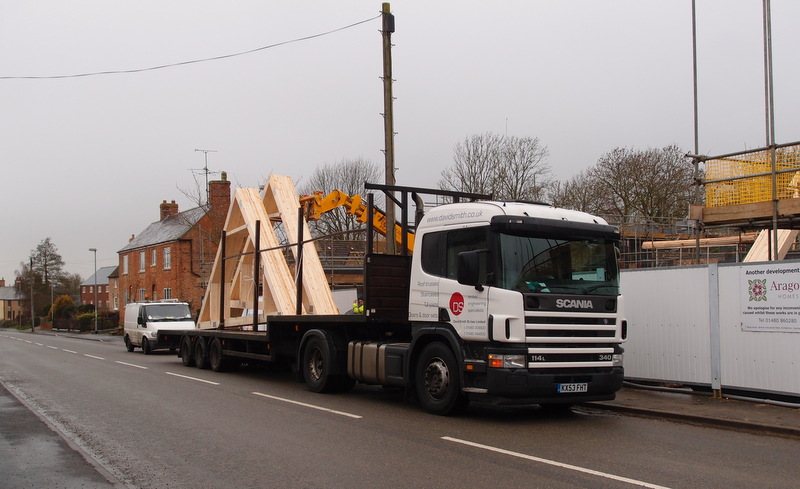
PLAN YOUR ROOF PACKAGE
New-build roof estimate calculator
Turn a scoped quotation into a budget range. Enter rates for the same roof package, before VAT, from your contractor or quantity surveyor. There is no preset market price. This estimates roofing work, not the price of a new home.
Understand the whole roof package
The structure supports the roof; the covering sheds weather; the layers and details between them manage moisture, heat and junctions. Ask the designer to describe how these work together. A quotation saying only 'new tiled roof' leaves too much room for different assumptions.
For a self-build tender, ask for a schedule naming the roof structure, covering product, underlay, battens, fixings, insulation arrangement, ventilation approach, rainwater goods and rooflight details. Mark which items sit in the roofing contractor's price and which belong to another trade. This is a comparison checklist, not a technical design specification.
NHBC Standards set requirements for homes registered with that provider. They are warranty guidance and should not be treated as a substitute for the building regulations or as evidence that every new home is NHBC registered.
Pitched or flat: compare the system, not the silhouette
A pitched roof may use concrete tiles, clay tiles or slate. The chosen product needs to suit the designed pitch, support and fixing arrangement. Ask for the actual manufacturer and product rather than an approximate visual description. Manufacturer information helps you understand the proposed covering, but the project designer must confirm suitability.
Flat and low-slope roofs need equally careful consideration of waterproofing, drainage, edges and penetrations. For a roof terrace or green roof, ask whether that use is expressly included in the design. A simple external appearance does not establish that a roof is suitable for access or extra loading.
Where the house includes dormers, rooflights or several roof forms, ask how those junctions are detailed and who coordinates the trades. Comparing two roof packages is easier when both refer to the same drawings and revision.
Insulation, ventilation and future changes
Ask where the insulation sits, what ventilation the design requires and what the homeowner should avoid obstructing. Do not assume that a roof-space opening, vent or gap is a fault simply because it is unfamiliar. Conversely, persistent moisture deserves investigation rather than a blanket reassurance that every new home needs to dry out.
If future solar panels, loft storage or a conversion matter to you, raise them before buying or finalising the design. Ask for written confirmation of the permitted use and any limitations. Do not cut roof members or add loads based on a generic online guide. A qualified designer must assess the actual structure and proposed change. Keep the homeowner manual available for anyone working in the roof space.
What changes a new-build roofing estimate?
Roof surface area is only one cost driver. The shape, number of junctions, chosen covering, rooflights, site access and scope of the structural package all change what is being priced. Ask whether scaffolding, lifting equipment, rainwater goods and design work are included before comparing a low headline rate with a complete package.
The calculator above multiplies your entered roof area by a quoted low and high rate, adds explicitly excluded items, then applies the selected VAT and contingency assumptions. It contains no claim about today's typical new-build rate. Replacement-roof benchmarks describe a different scope and should not silently become a new-build package price.
For a home already priced by a developer, the roof is normally part of the property purchase. This calculator is for a separately scoped roof package or self-build budgeting, not a way to subtract the roof's value from the asking price.
Use the calculator without double-counting
Take the roof surface area from drawings or a contractor's measurement. It is not the same as the building's footprint. Enter rates for matching specifications, before VAT. If your quotation is a single fixed price, ask for a comparable breakdown or use the calculator only as a sense-check agreed with your adviser.
Add each excluded item once. If the rate already includes the structure or scaffolding, do not add it again. Zero extras leaves missing work unbudgeted; it does not mean those items are free. The default 10% contingency is an editable planning choice, not a prediction.
The worked example uses invented round numbers: 100 m² at £100-£150/m², plus £1,000-£2,000 extras, 0% VAT and 10% contingency gives £12,100-£18,700. These figures demonstrate arithmetic only. Confirm VAT with your supplier: qualifying new-home construction can be zero-rated, but separate supplies or services may have different treatment. Mixed-tax packages need separate calculations.
A quotation checklist for self-builders
Give each contractor the same drawings, specification and requested start window. Ask for the scope, exclusions, VAT, payment stages, programme assumptions, insurance and process for variations in writing. Record who is responsible for coordinating the roofing work with the main contractor and other trades.
A useful comparison sheet has five columns: item, included or excluded, product or standard specified, responsible party, and evidence due at handover. Use it to expose a missing item before treating one quote as cheaper. Keep substitutions subject to written agreement with the appropriate designer.
Verify contractor credentials through the organisation that issued them. A membership logo on a website is not enough. The local roofing links below provide additional places to explore, while NFRC has a contractor search and guidance on checking membership.
Before completion: make roof checks part of handover
Ask the developer how a pre-completion inspection or snagging visit is arranged and what access is permitted. Make roof-related observations part of a written record, with photographs taken from a safe position and a request for a clear response. Never enter an active construction site or climb onto a roof to inspect it yourself.
Request the roof specification, homeowner maintenance guidance, relevant product guarantees and the applicable warranty documents. Ask how to report a defect and how to track its resolution. For a flat or apartment, establish who manages the roof and how roof concerns should be reported.
The New Homes Quality Board's snagging guide offers a useful starting point. Check whether its code and procedures apply to your developer; an independent surveyor can advise on the appropriate inspection for the property.
Warranty questions and problems after moving in
Identify the actual warranty provider and read the policy for your home. NHBC Buildmark, for example, has a builder warranty period followed by a different insurance period; that does not mean every roof issue is covered on the same terms for the entire policy. Other providers and individual policy versions can differ.
If there is a problem, record when it occurred, what you observed and whom you contacted. Follow the developer's reporting process and the provider's guidance, retaining copies. If water is entering near electrical equipment or there is a structural safety concern, seek urgent professional help rather than waiting for a routine snagging appointment. Do not use this site's contact form as an emergency channel.
What should I ask about a new-build roof before buying?
Ask for the specified covering and roof design, the warranty provider, any roof-space use restrictions and the handover documents. Confirm the inspection and defect-reporting process. If a future alteration matters, seek project-specific advice before relying on it as part of your purchase decision.
Does a new-build roof need planning and building approval?
Planning permission and building regulations approval are separate matters. Ask the project's adviser which approvals apply and what completion evidence is required for the property. Requirements vary across the UK. The Planning Portal explains the distinction for England; use the appropriate local authority or national guidance elsewhere. This guide does not assess the permissions for a particular plot.
Can I use an online estimate instead of a roofing quote?
No. The calculator organises quantities and rates you supply; it cannot inspect the design, resolve exclusions, assess a structure or guarantee a contractor's price. Use the result as a discussion document. Agree a complete written scope and obtain a project-specific quotation before commissioning work.
Independent, and open to better information.
This guide is published by UK Domain Trader. It is an introductory resource, not personalised professional advice or an endorsement by the organisations listed. Links are included to help you find reliable information. No business has paid for an editorial mention in this guide. Know a useful resource, or spotted something that needs correcting? Tell us below.
Research sources and image attribution
- NHBC homeowner guidance, including roof-space condensation · researched 2026-10-06
- NHBC Standards and their scope · researched 2026-10-06
- Marley roofing product information · researched 2026-10-06
- NFRC: choosing and checking a roofing contractor · researched 2026-10-06
- HSE: roof-work risks · researched 2026-10-06
- HMRC: VAT when building new homes · researched 2026-10-06
- HMRC detailed construction VAT guidance · researched 2026-10-06
- New Homes Quality Board homeowner snagging guide · researched 2026-10-06
- NHBC: reporting a problem and making a claim · researched 2026-10-06
- NHBC frequently asked questions · researched 2026-10-06
- Planning Portal: planning and building regulations approval · researched 2026-10-06
- Construction photograph and licence · researched 2026-10-06
Photograph: Michael Trolove / Geograph. Original and rights information. CC BY-SA 2.0. Displayed without alteration; the responsive layout may crop its visible area.
MAKE A CONNECTION
Have something
to share?
Send a correction, suggest a useful link or ask about a potential sponsorship.
Your privacy
UKC LABS LTD, trading as UK Domain Trader, operates this guide. The enquiry form sends your name, email, message and enquiry type to our central inbox so we can respond. These details are not published or sold. Enquiries are retained for up to 365 days unless a longer period is needed to handle an ongoing request or legal obligation. We process enquiries to respond to your request and administer our business; ticking the acknowledgement does not subscribe you to marketing.
We count page requests and useful-link clicks without visitor tracking cookies. Security controls use short-lived pseudonymous rate-limit records, and server security logs may contain IP addresses. To request access, correction or deletion of your information, use the contact form and select correction, or visit UK Domain Trader’s privacy policy. This form is not an emergency or public-service reporting channel.